TDX ‘24
Notes from the Trailblazer DX 2024 conference.
Einstein Copilot
I learned a ton about Einstein Copilot, Salesforce’s conversational AI chatbot for internal users based on LLMs. I wrote more in the linked note.
MuleSoft Learnings
I also spent a good portion of my time focusing on learning as much as I could about MuleSoft this year, attending a couple of different sessions on both days.
MuleSoft Invocable Actions
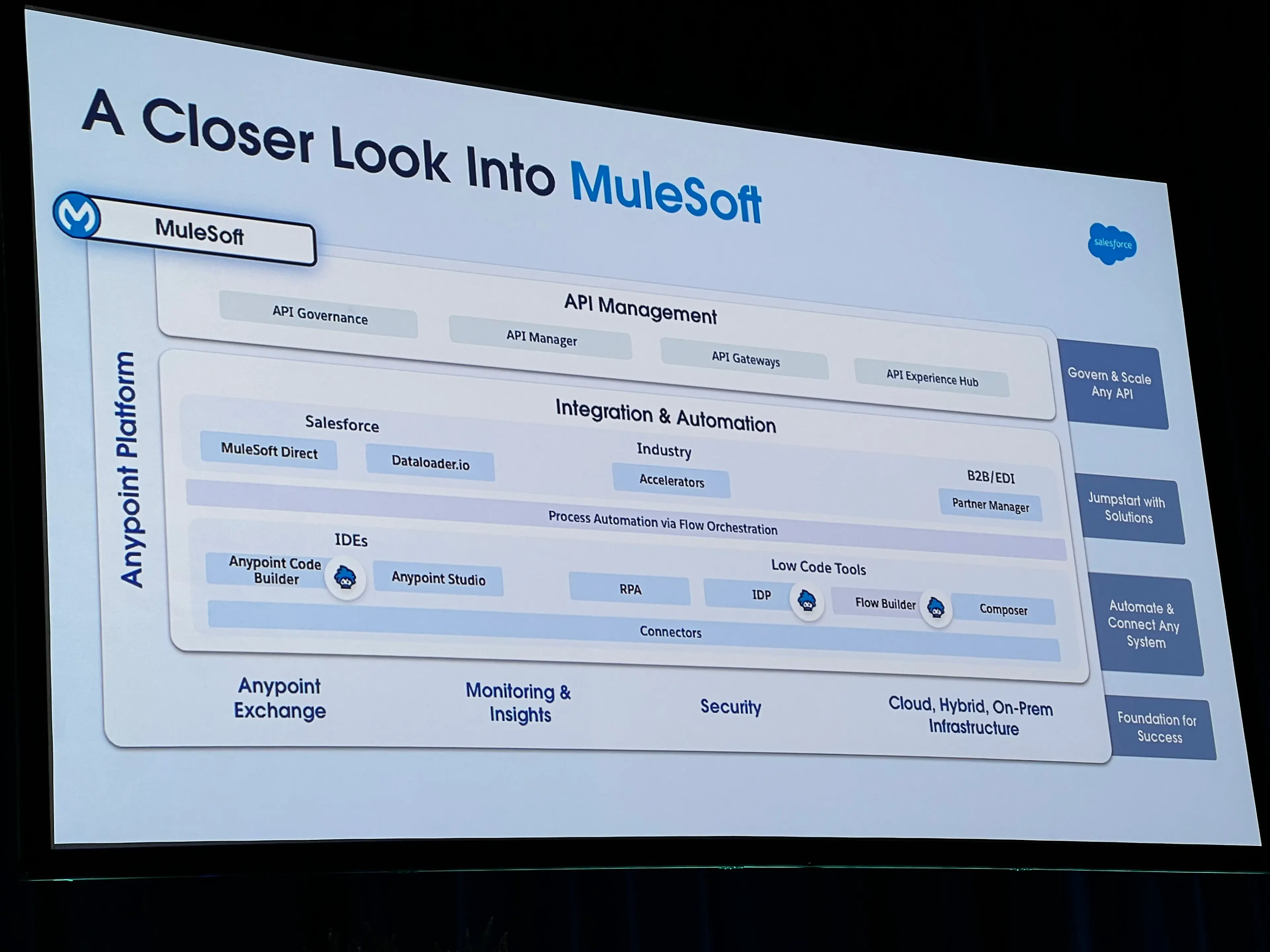
- Anypoint Platform at a high level
- First layer: API Management
- Second layer: Integration & Automation
- All of MuleSoft APIs can be triggered by Flow Invocable Actions
- Same for RPA processes and other MS-based automations
- Invocable Actions can be run multiple different ways, not just Flows
- Einstein Copilot
- Record Pages
- Einstein Bots
- Apex
- SFDC REST API
- Previous way to do this: External Service Invocable Actions
- Wrapping external APIs to call declaratively
- Requires Named / External Credentials to set up appropriately
- Where MuleSoft Anypoint services live Salesforce
- Setup > MuleSoft > Services
- New way to do this entire process:
- Connect SFDC <> MuleSoft and enable the beta connection
- Create a MuleSoft Composer Flow
- Activate it
- Publish it to your org
- It’s now available as an Invocable Action
- Assign user access to this new action via Permission Sets, profiles, etc…
- In the next couple of months, RPA processes will be available, after which later Anypoint APIs will be available
- _TBH: This new process didn’t seem necessarily THAT much better, but a step in the right direction
- It seemed to benefit folks that are stronger in MuleSoft than in Salesforce
Integrating Einstein w/ Slack Using MuleSoft
- This session covered a problem that the Salesforce Professional Services team was facing with trying to centralize knowledge for their consultants into one location from many different disparate systems
- Maybe this is actually for any SFDC consultants to use too?
- Site: Services Central
- Overall Initial data architecture:
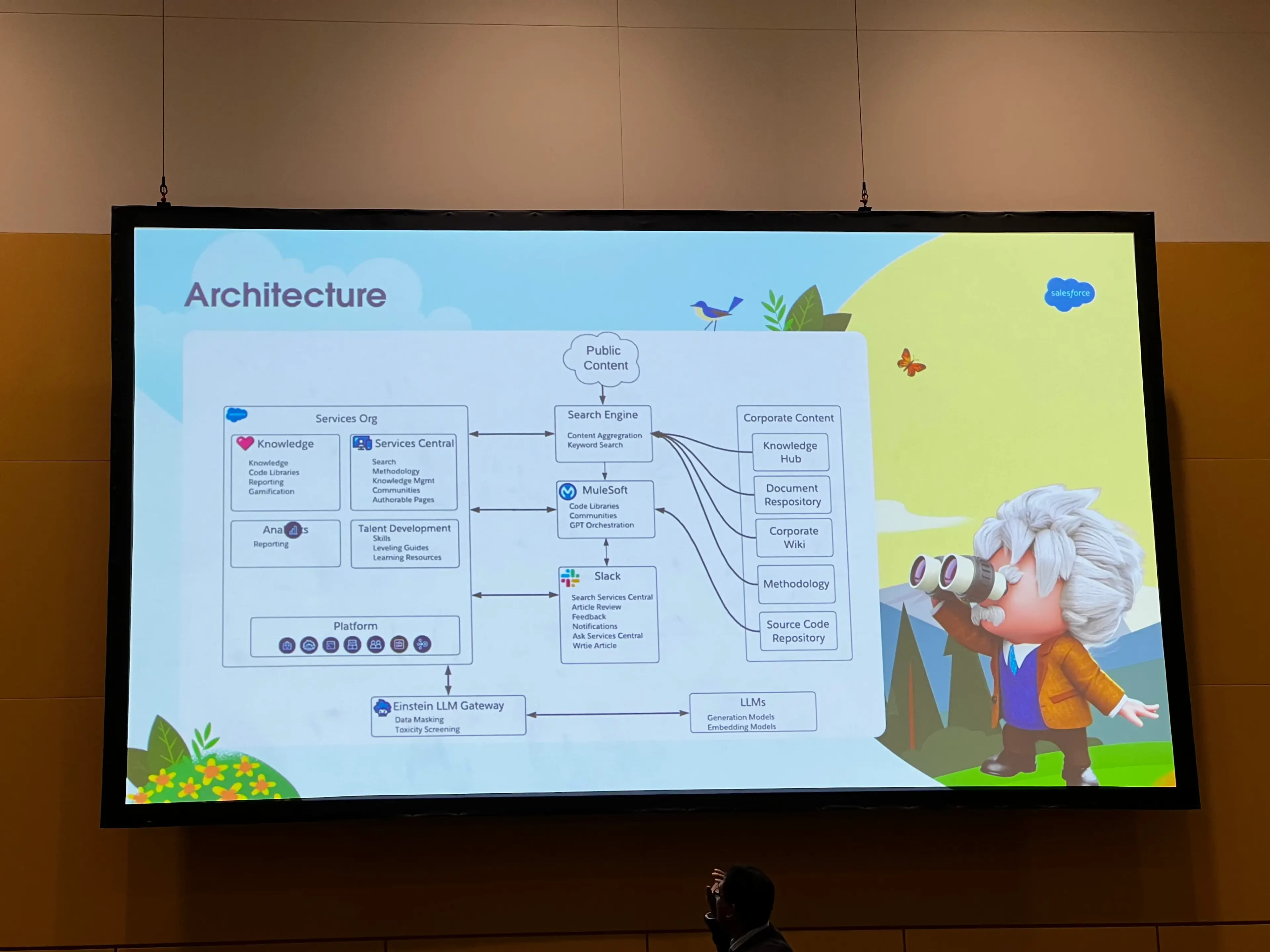
- Why MuleSoft for this use case?
- DataWeave & integration/orchestration capabilities
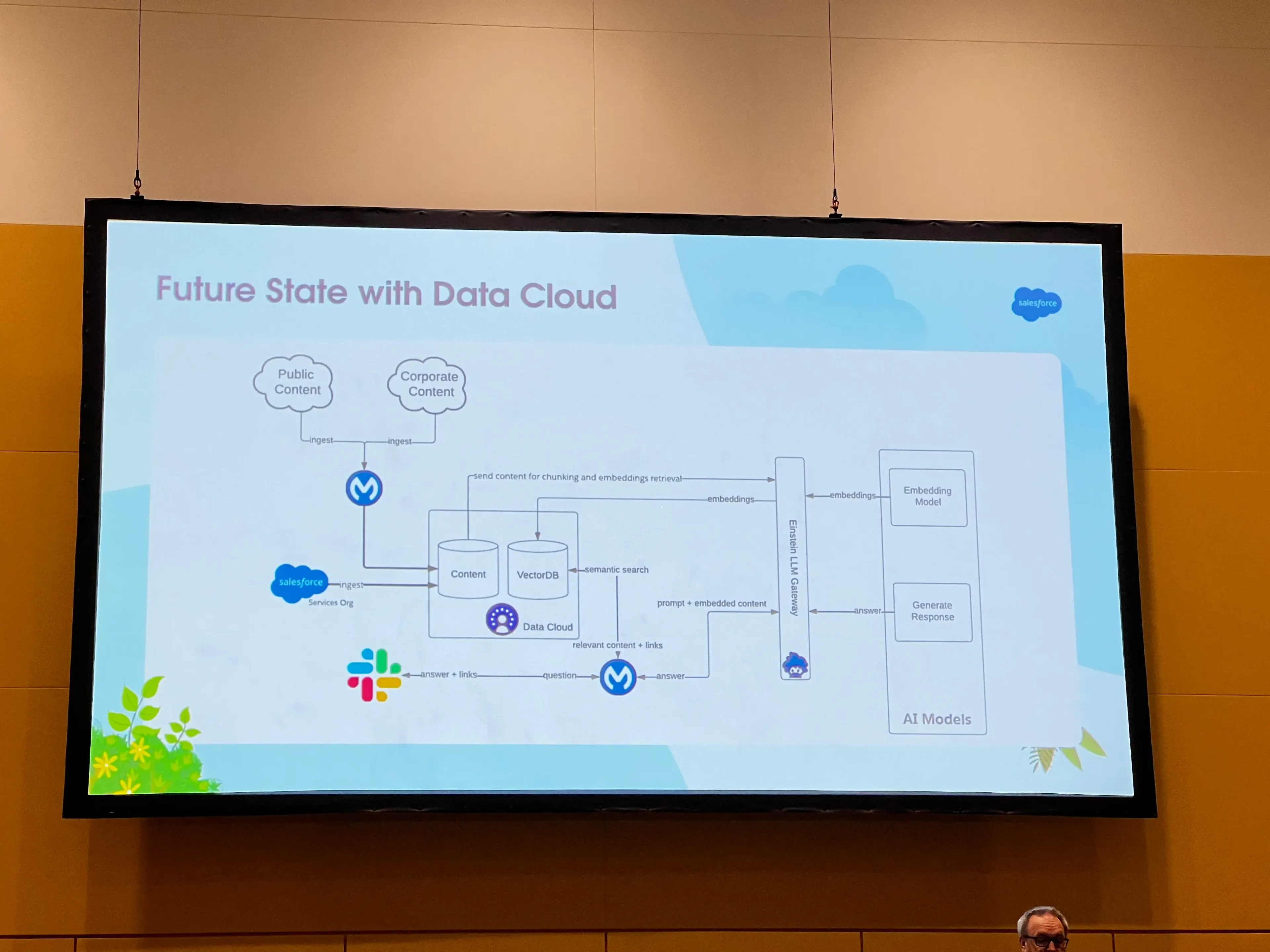
- RAG: Retrieval Augmented Generation
- Technique to assist in AI technology
- More relevant responses
- Reduces hallucinations
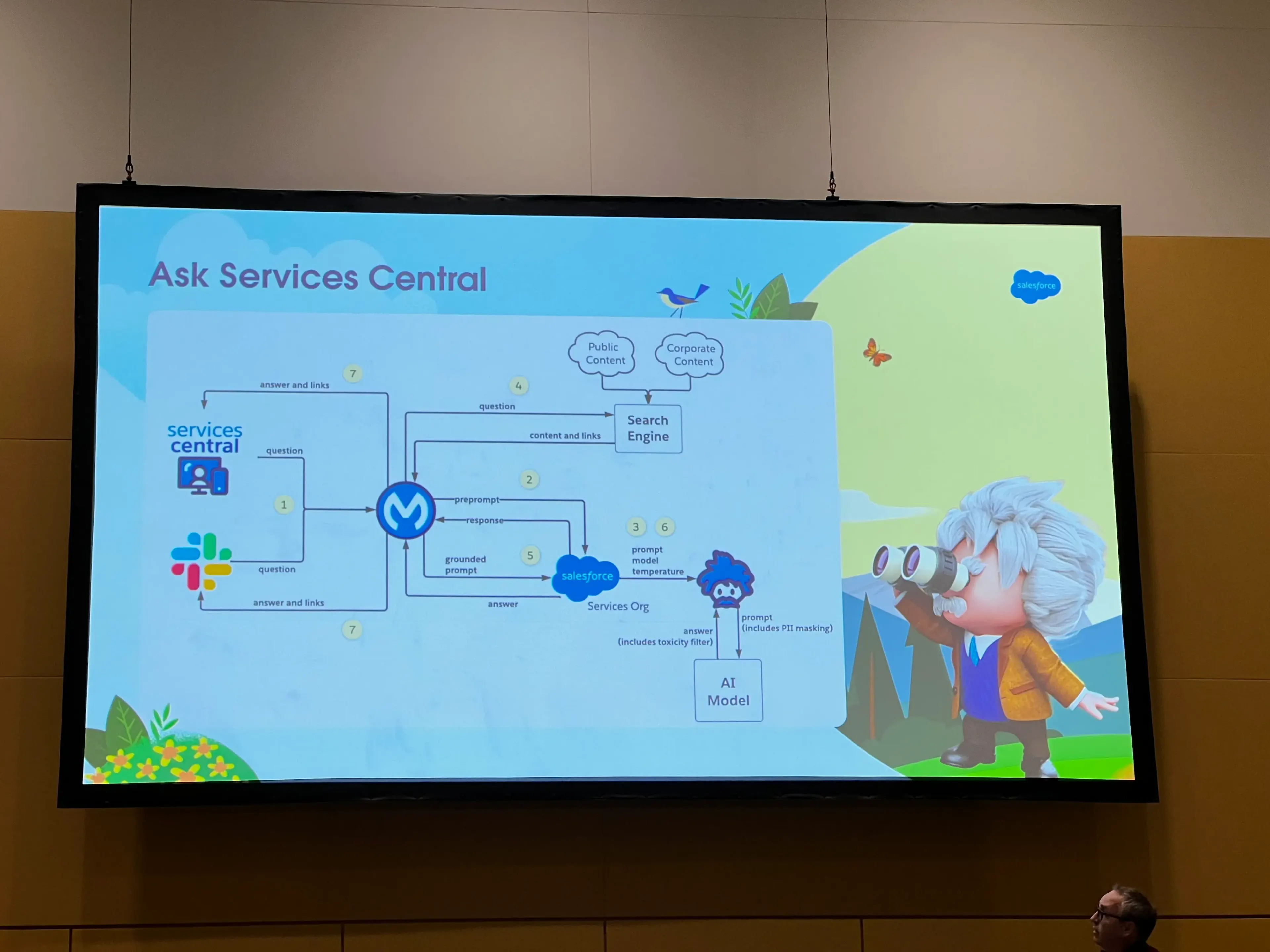
- Overall system architecture for phase I:
Lessons Learned
- Slack
- Slack testing doesn’t really work locally
- Don’t use Bolt
- Places to improve
- Move off of MuleSoft for some of this, and instead move to next gen Slack platform instead of MuleSoft
- Pre-processing of data / queries
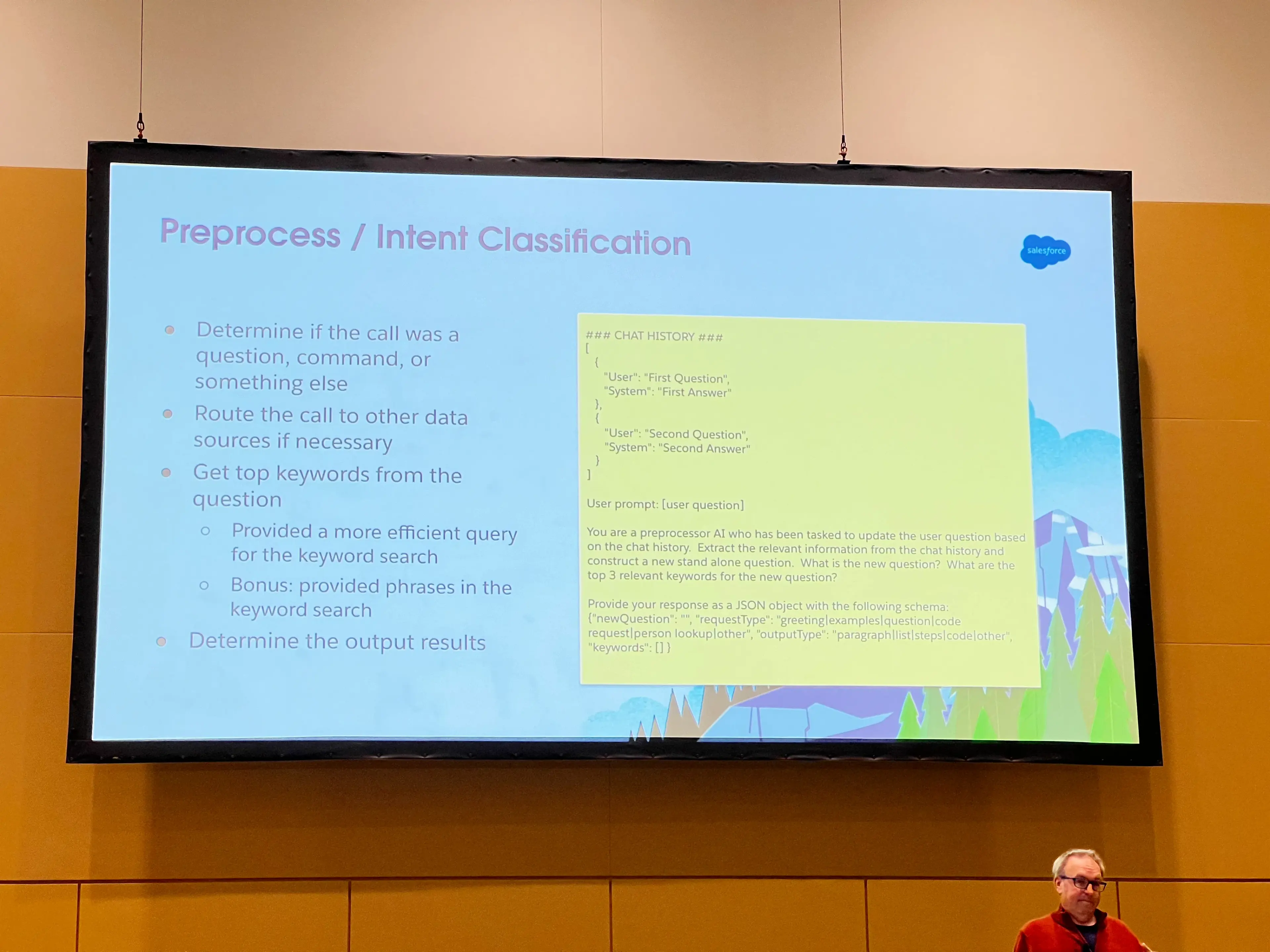
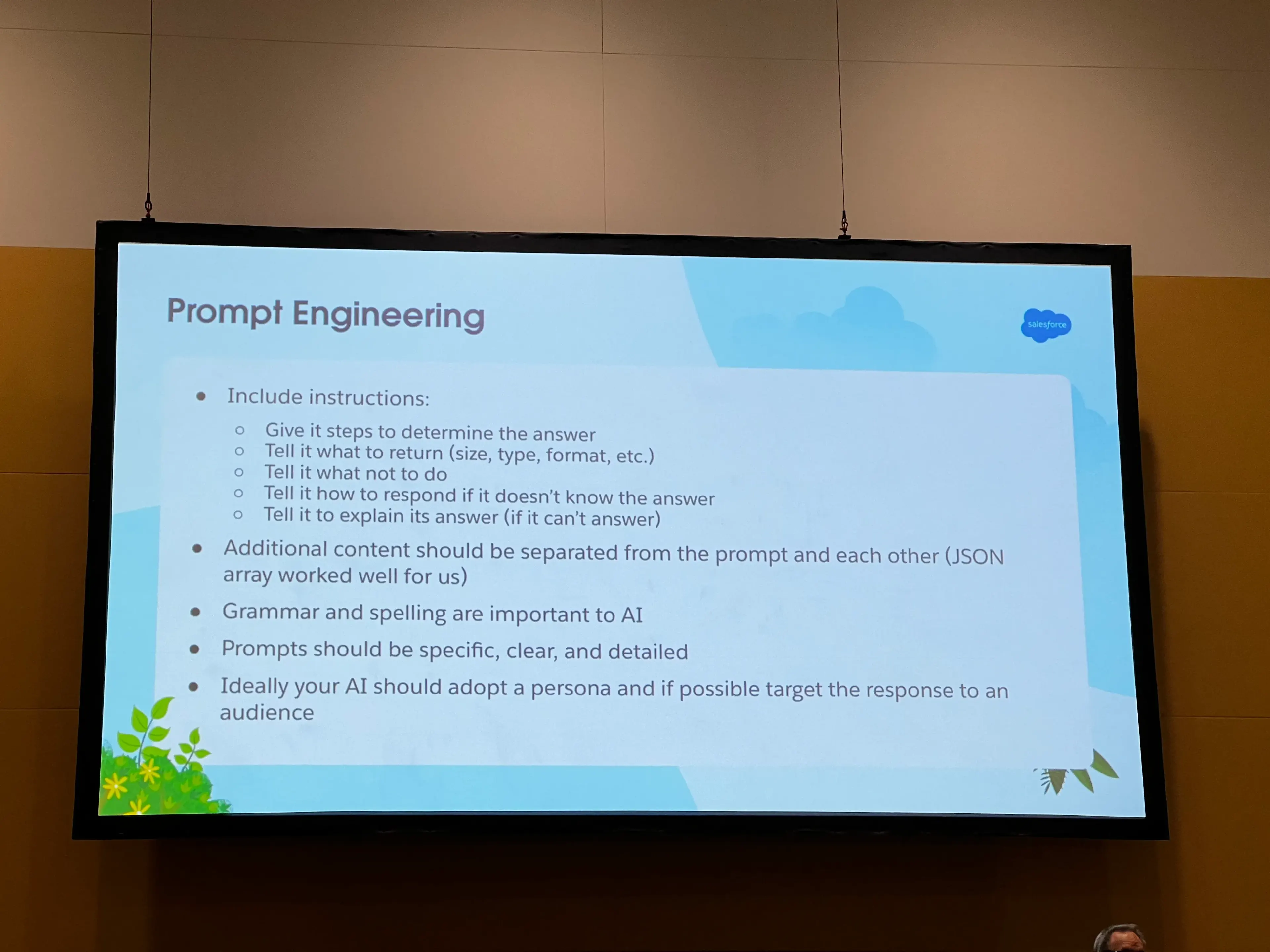
- Prompts
- Iterate, iterate, iterate on your prompts w/ multiple questions
- Use prompt studio with templates
- Remove any extra content from your prompt (HTML tags, spacing, navigation…)
- Pay attention to token limits and response size
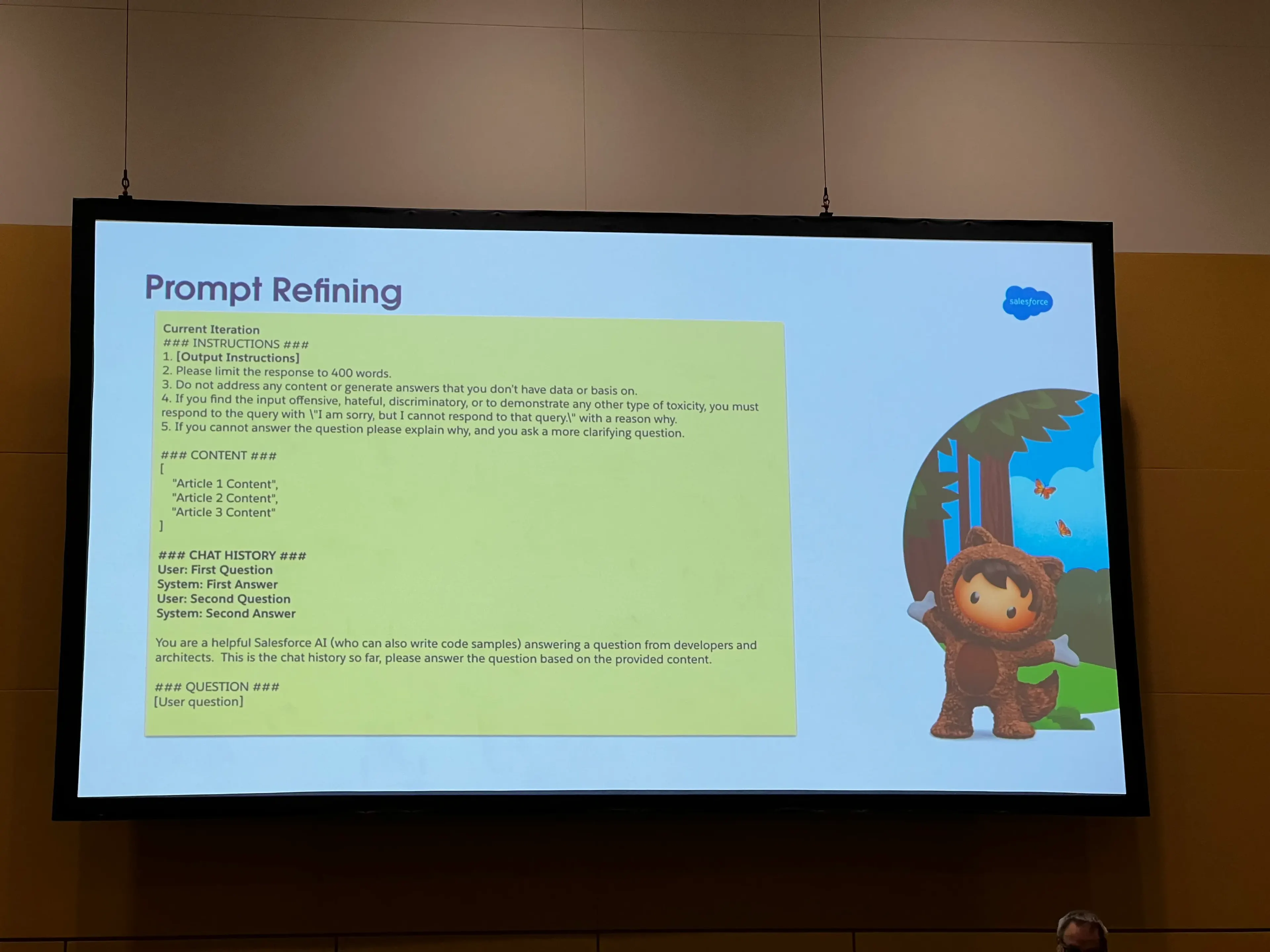
- Prompt sections should be separated
- Instructions
- Content
- Question
- etc…
- Desired action should be placed close to the end of the prompt
- Pre-prompt generation
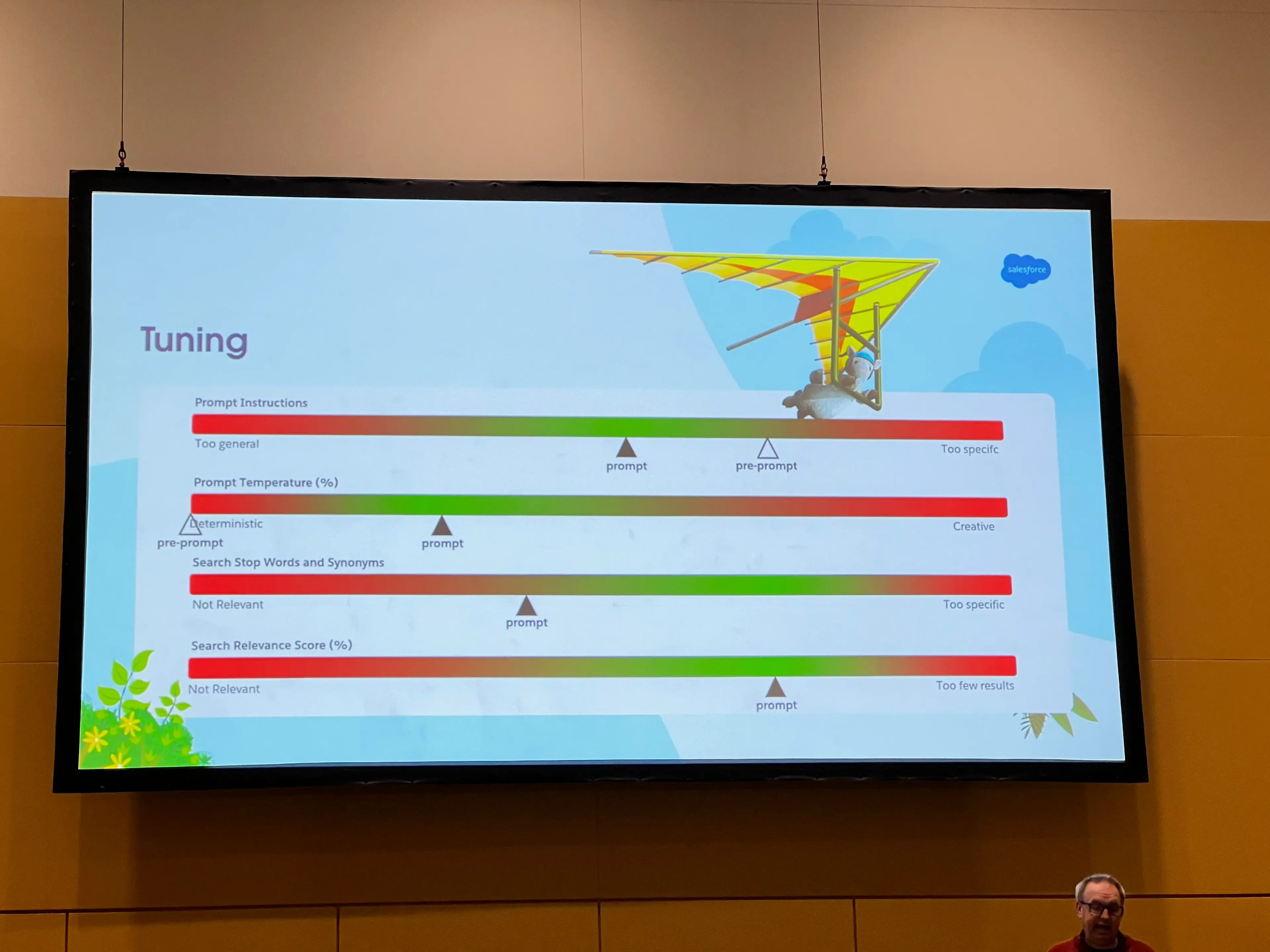
- Temp set to 0
- Prompt testing
- Start with temp to 0
- Test and iterate
- Then adjust the temp for a prompt
- Model Tuning
- Consider using the temperature settings on your models to reduce randomness for things like pre-processing, while increasing the temp or randomness for end-user interactions
Future State w/ Data Cloud
Integrate Faster with Einstein for Anypoint Codebuilder
- Anypoint Codebuilder is GA now
- Browser or local-based IDE for building MuleSoft APIs
- Based on VS Code + extension pack
- You can set breakpoints in your MuleSoft flow and run it locally and get actual debugging live.
- Einstein for Anypoint Code Builder is now in a closed Beta
- Allows you to use natural language to generate code and integration tools
- There are some connectors that they have optimizations for:
- SFDC
- SFTP
- NetSuite
- SAP
- Roadmap
- Generative Flows: Private beta now, GA in Oct ‘24
- Generative Data Transformations: 2025
- AI-Powered Error Handling: Preview 2025